
Guides
Write by voice, step by step
How to set up SayVelio and get clean text from your voice: the dictionary, cleanup prompts, modes, snippets and ready-made recipes for emails, chats and AI prompts.
Getting started
How to dictate well and make it a habit.
 Getting started
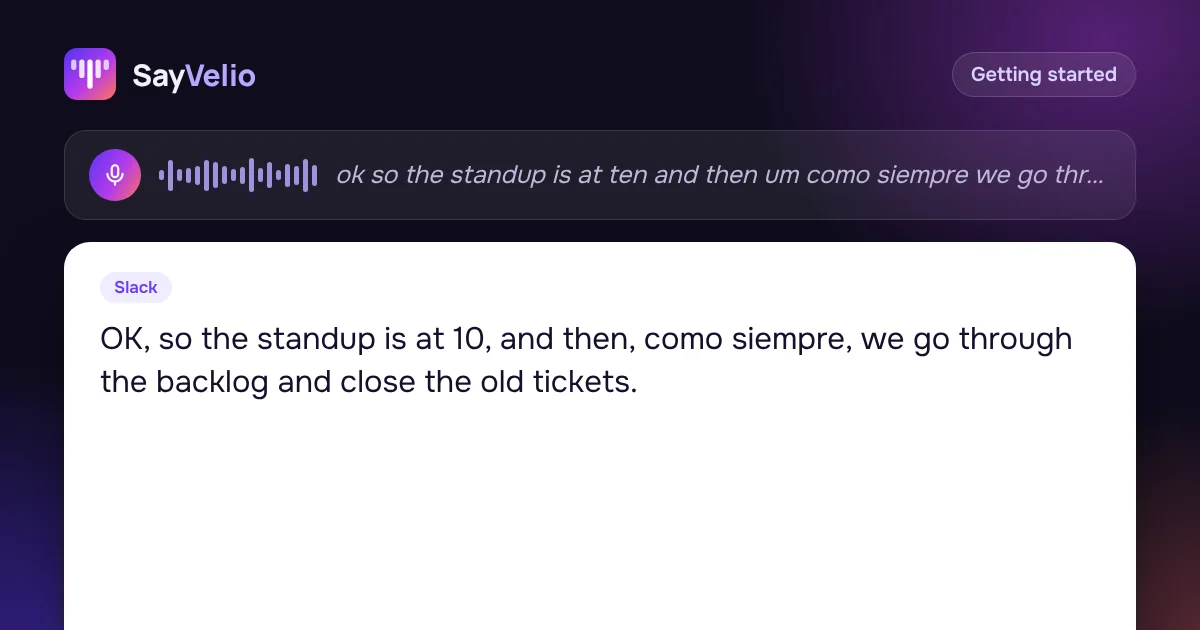
Dictating in two languages: mix English terms into your own language
How SayVelio handles bilingual speech: language detection on every dictation, English terms kept as they are, no translation, and how the dictionary and app styles keep mixed text right.
MacWindowsiPhoneAndroid Getting started
How to dictate well: 9 habits for clean voice typing
How to speak so dictation gets it right the first time: hold the key, say whole thoughts, correct yourself out loud, dictate lists, and what to do when a word comes out wrong.
MacWindowsiPhoneAndroidFeatures
What each part of SayVelio does and how to set it up.
 Features
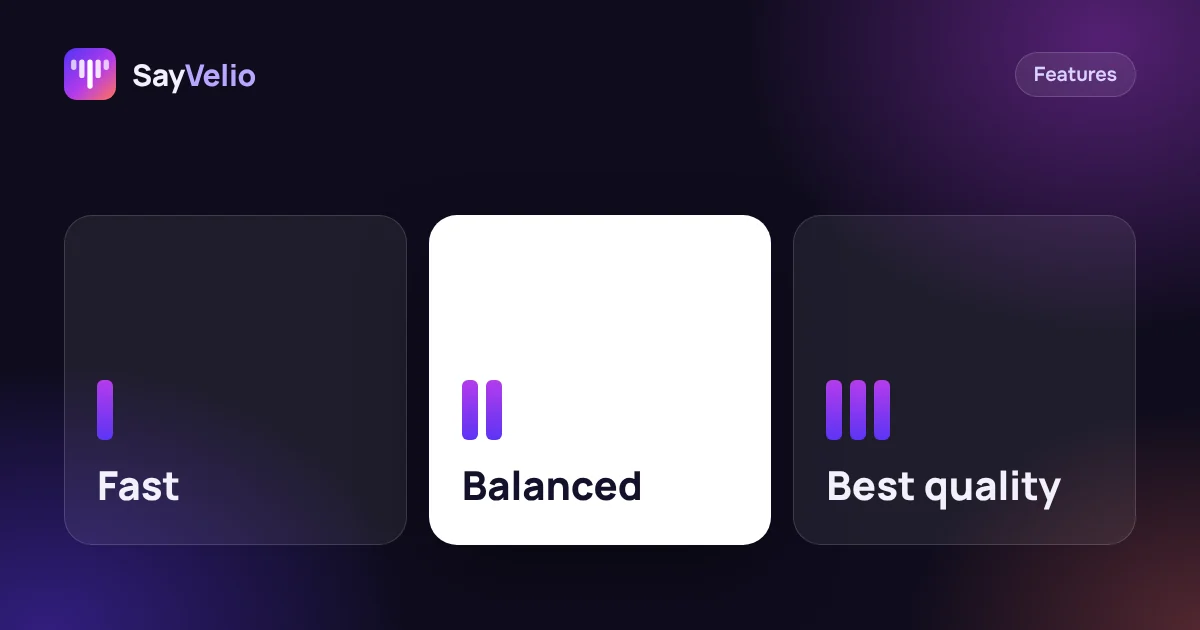
Fast, Balanced or Best quality: which dictation mode to choose
What each SayVelio mode does with your voice, how long it takes, why short phrases skip cleanup, and which mode fits chats, email and long dictations.
MacWindowsiPhoneAndroid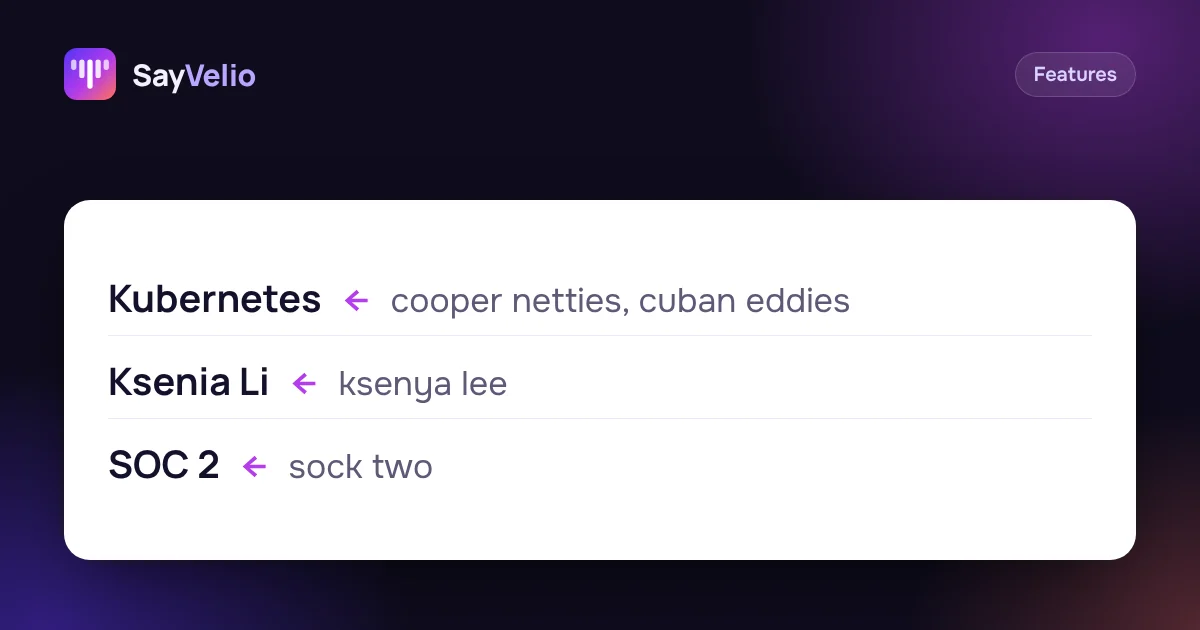 Features
Custom dictionary: teach dictation your names, brands and jargon
What to add to your SayVelio dictionary and what to leave out, how to fix a word that keeps coming out wrong, and why a short dictionary beats a long one.
MacWindowsiPhoneAndroid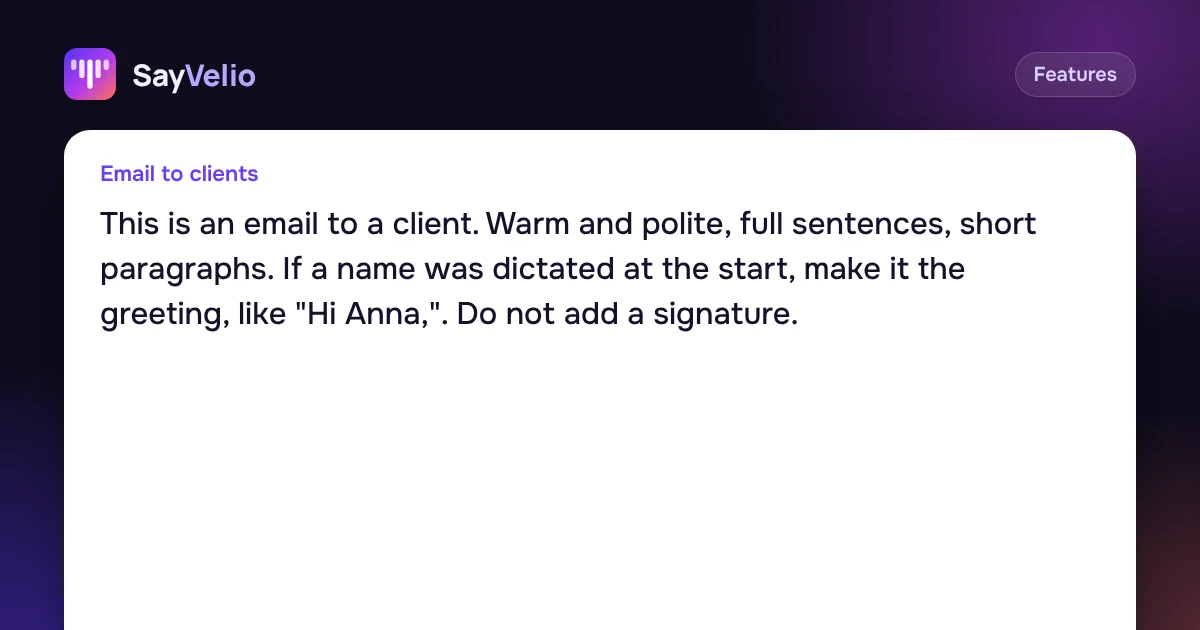 Features
Cleanup prompts: one main prompt and a style for each app
How SayVelio turns speech into clean text, how to change the main prompt, and how to give email, chats, code and notes their own style, with examples to copy.
MacWindowsAndroidUse cases
Recipes for emails, chats, notes and AI prompts.
 Use cases
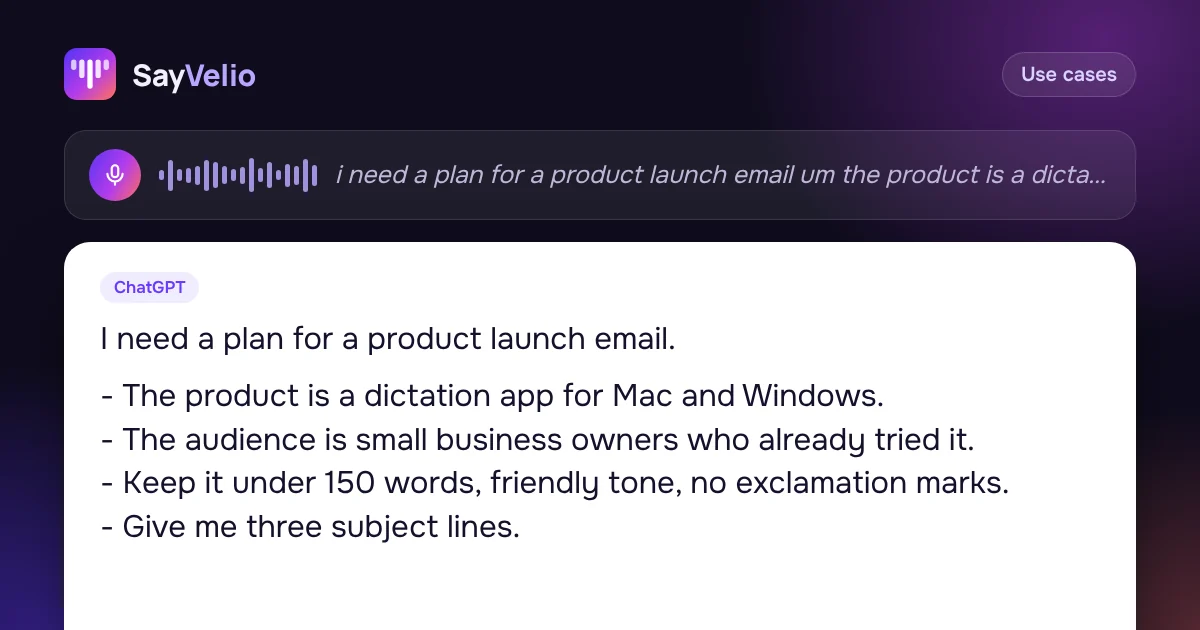
Voice prompts for ChatGPT and Claude: say more, get better answers
Why spoken prompts give AI assistants better answers, a four-part structure to speak in, real examples, and a style that keeps every detail of your prompt when you dictate it.
MacWindowsiPhoneAndroid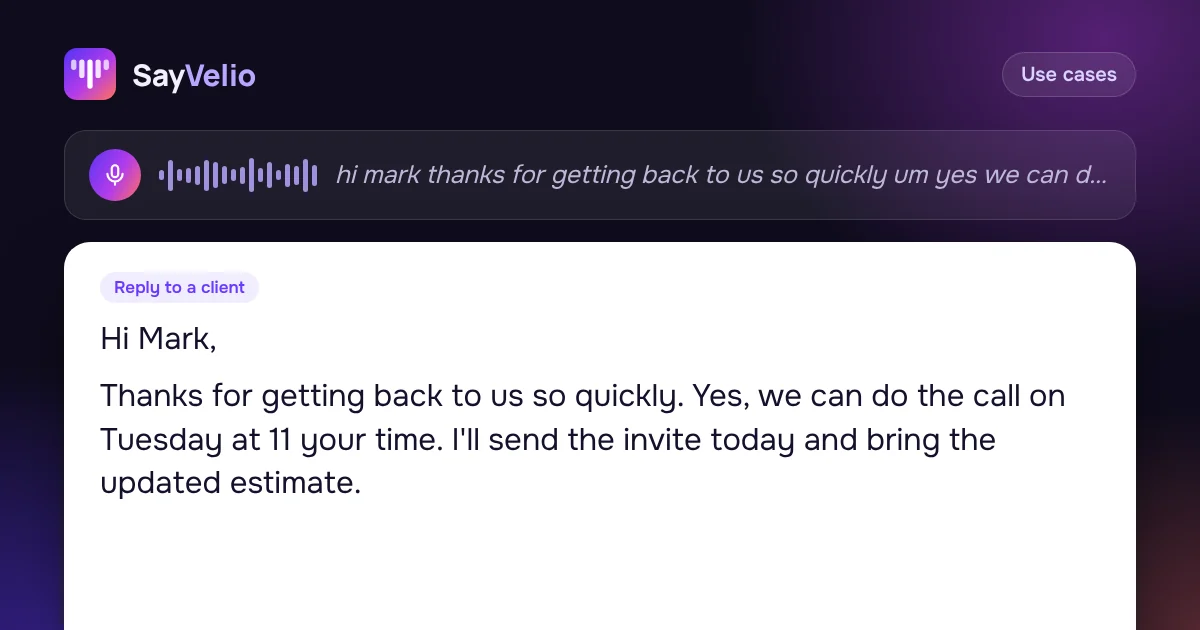 Use cases
How to write emails 3× faster by voice
Dictate emails in Gmail, Outlook or Apple Mail and get clean, polite text: a simple structure to speak in, five real examples, and a style that makes every email sound right.
MacWindowsiPhoneAndroidHow voice typing works
What happens between your voice and the finished text: sound, recognition, cleanup, privacy and accuracy.
 How voice typing works
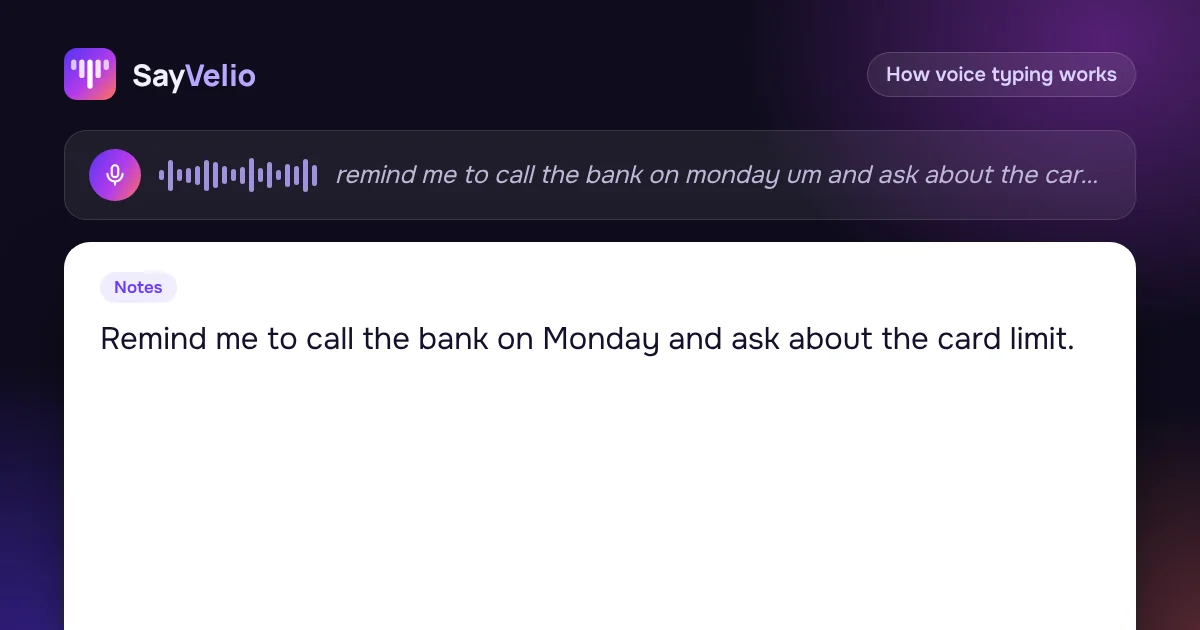
What voice typing is: the path from your voice to text on screen
Voice typing, transcription and voice control are three different things. Here is what dictation actually does, the stages between microphone and cursor, and where each of them can run.
MacWindowsiPhoneAndroid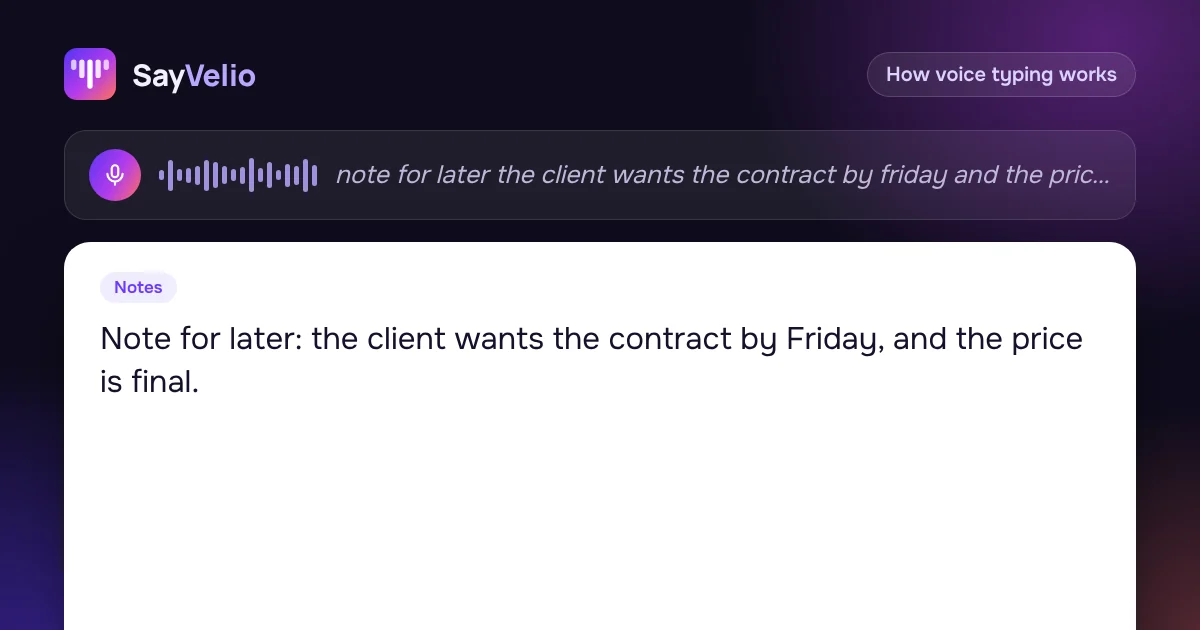 How voice typing works
Where your voice goes: privacy and security in voice typing
How to read privacy claims about dictation: which parties receive audio and text, what encryption in transit does and doesn't protect, what stays on your device, and exactly how SayVelio routes your recordings.
MacWindowsiPhoneAndroid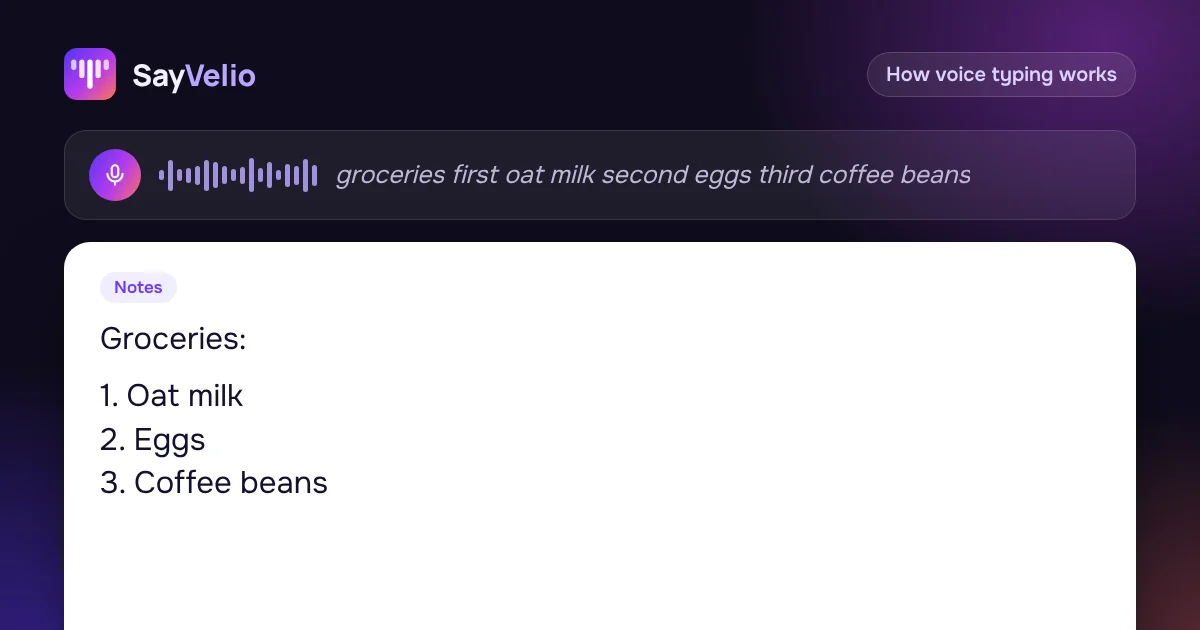 How voice typing works
What makes a good voice typing interface
Recognition accuracy is only half of dictation. A good voice interface shows when it's listening, separates provisional text from final text, inserts at the cursor and makes mistakes cheap to fix. Here's what to look for, and when a keyboard is still better.
MacWindowsiPhoneAndroid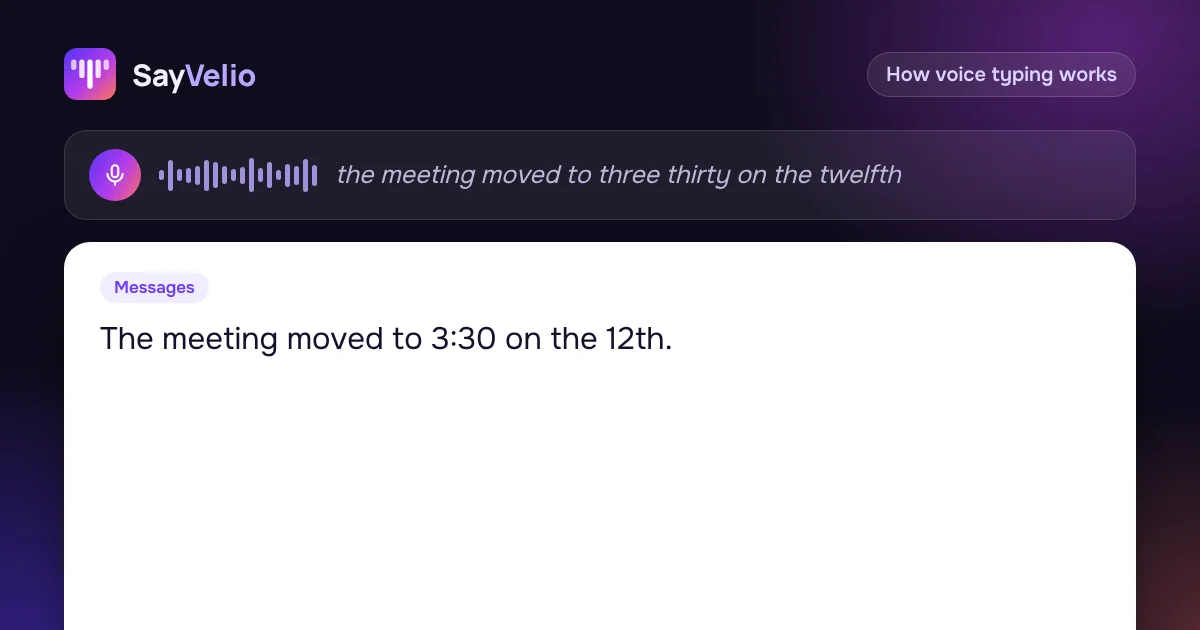 How voice typing works
Speech recognition vs text-to-speech: what's the difference
Speech recognition turns voice into text; text-to-speech turns text into voice. How each one works, where they meet (numbers, dates, names), how speech codecs differ from both, and why a dictation app doesn't read text aloud.
MacWindowsiPhoneAndroid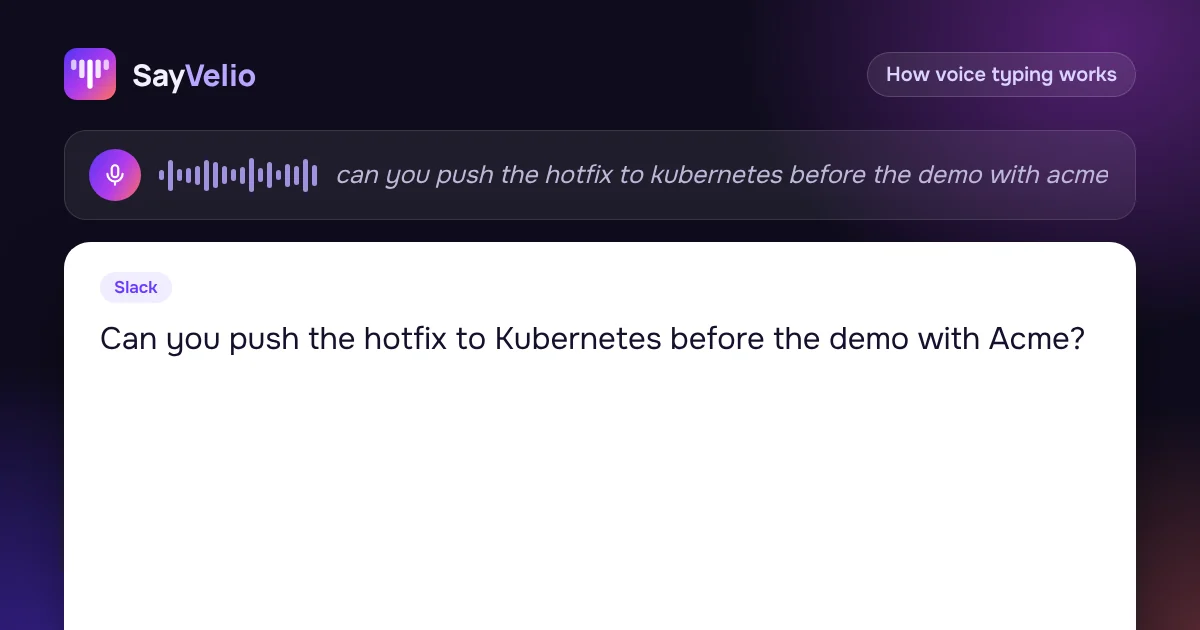 How voice typing works
How speech recognition learns, and why context helps with names and jargon
Training vs everyday use, why models struggle with unfamiliar names and accents, how context hints and dictionaries steer recognition, and why dictating doesn't mean your voice trains the model.
MacWindowsiPhoneAndroid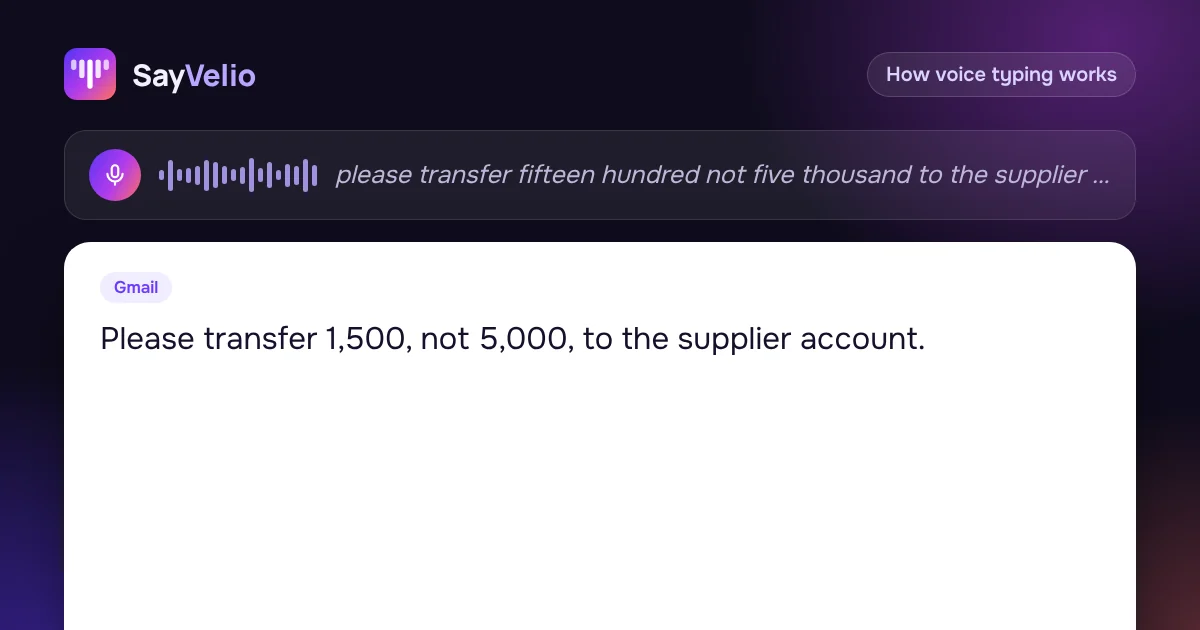 How voice typing works
How accurate is voice typing? Word error rate, speed and real limits
How speech recognition accuracy is measured (word error rate), what research says about dictation vs typing speed, what makes results worse, and which words you should always double-check.
MacWindowsiPhoneAndroid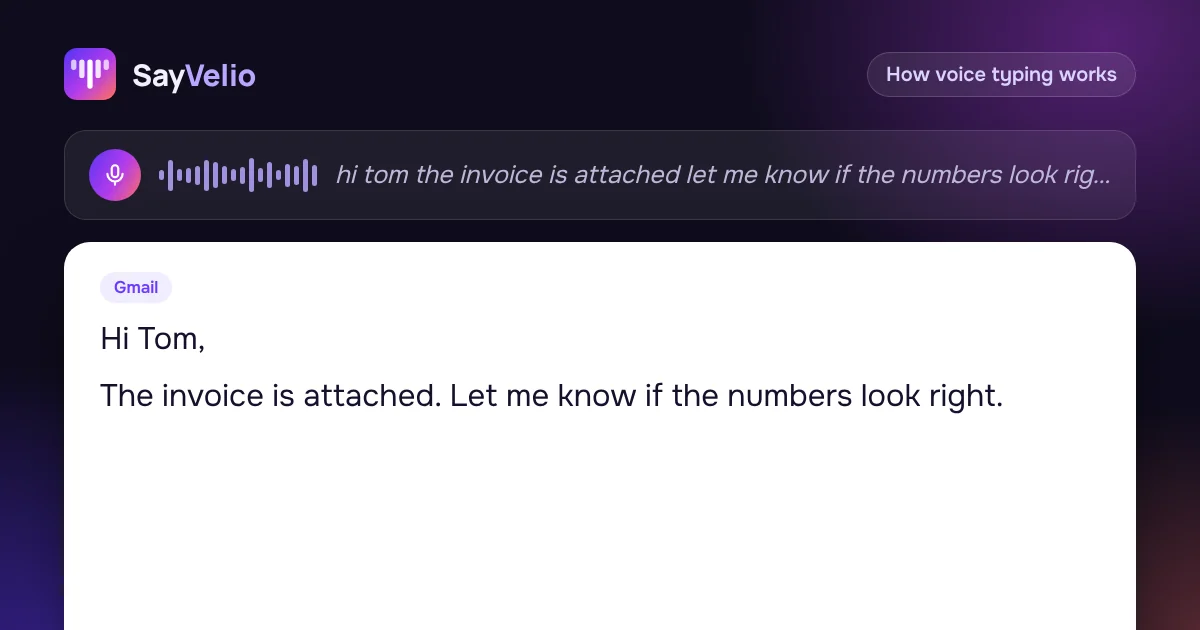 How voice typing works
Preparing your voice for recognition: noise suppression, echo control and voice detection
What happens to audio before speech recognition: gain control, noise suppression, echo cancellation, voice activity detection and spectrograms, and why "cleaner" audio isn't always better.
MacWindowsiPhoneAndroid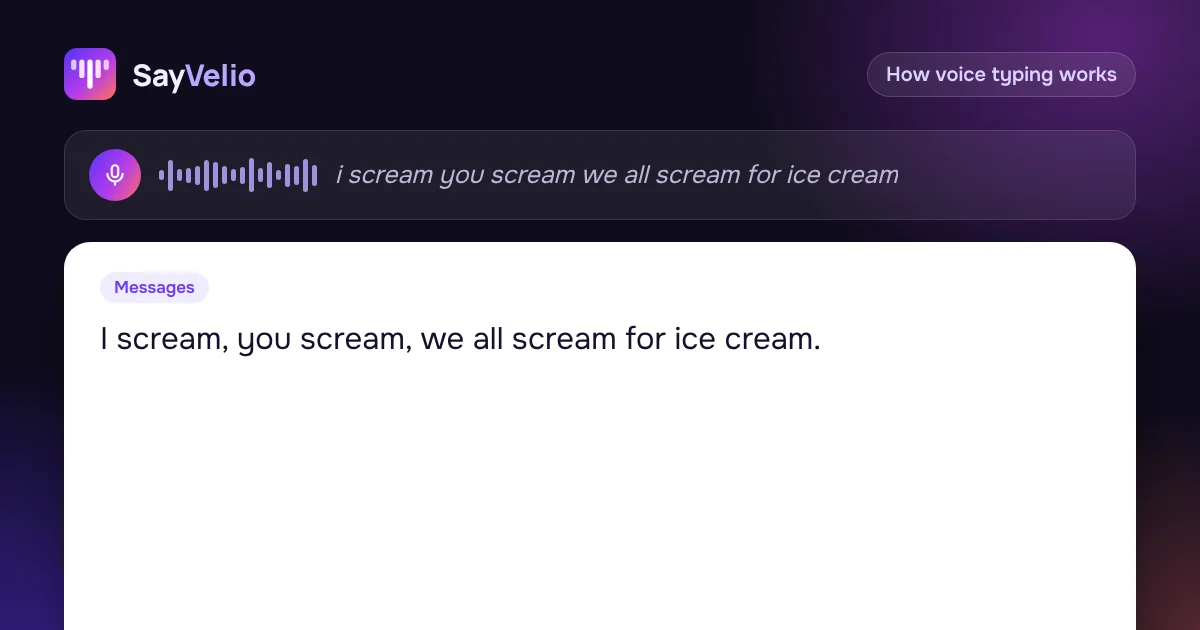 How voice typing works
How speech recognition turns sound into words
Why speech is hard for computers, how classic recognizers with acoustic, pronunciation and language models worked, what end-to-end models (CTC, encoder-decoder, transducers) changed, and why streaming text can change while you speak.
MacWindowsiPhoneAndroid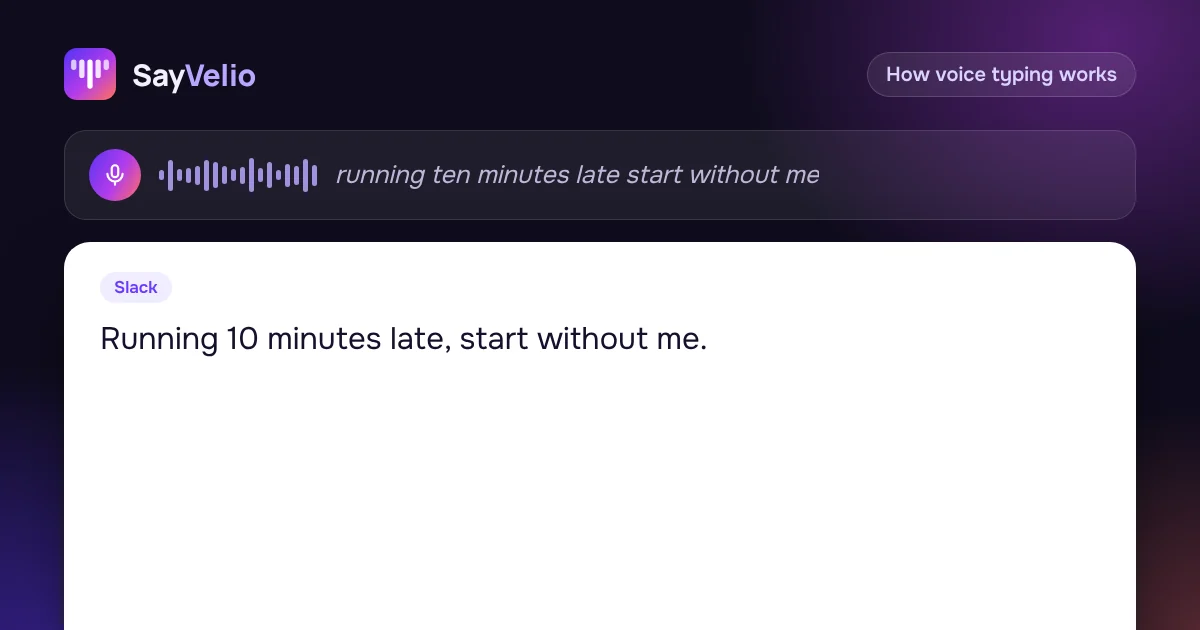 How voice typing works
From sound waves to digital audio: what your microphone records for dictation
How a microphone and your device turn speech into numbers: sample rate, bit depth, mono audio, resampling, and why microphone placement matters more than specs.
MacWindowsiPhoneAndroid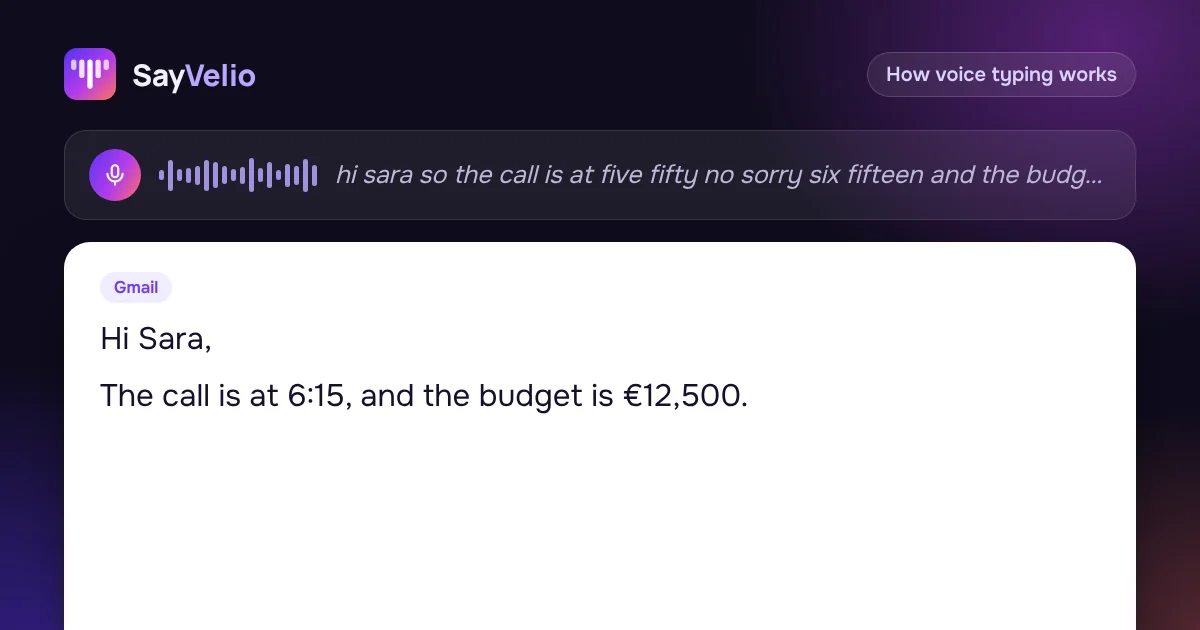 How voice typing works
From raw transcript to readable text: punctuation, numbers and cleanup
Why a raw speech transcript isn't ready to send, how punctuation, capitals, numbers and lists get added, why "five fifty" is ambiguous, and how to keep a cleanup step from changing your meaning.
MacWindowsiPhoneAndroid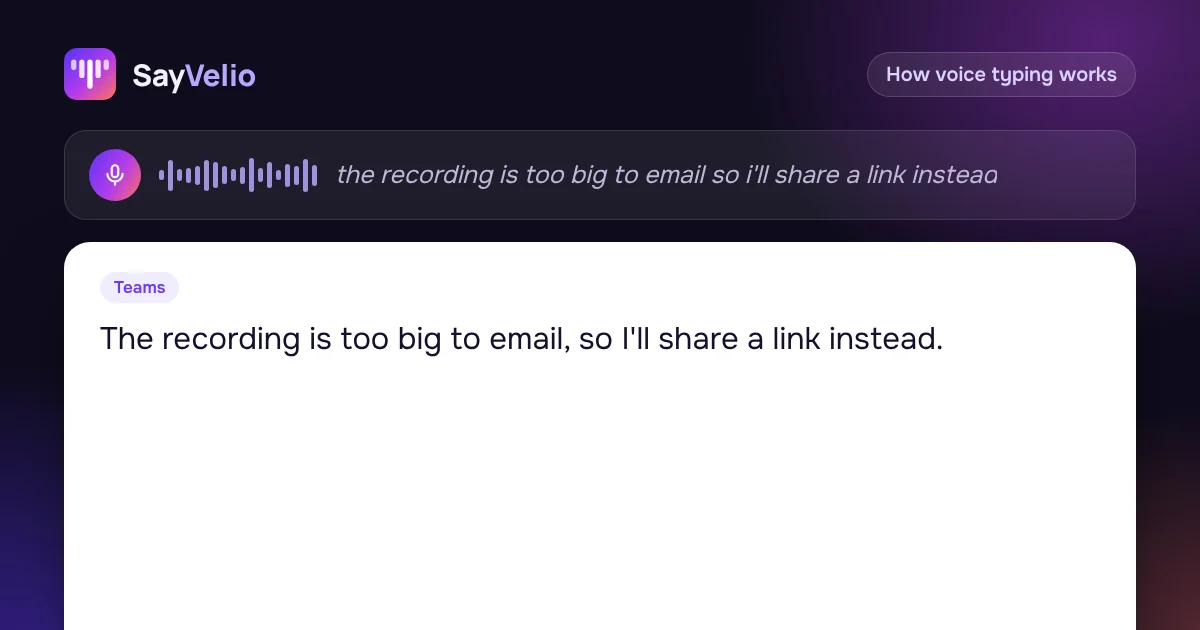 How voice typing works
Audio formats and compression in voice typing
Digital audio, encoding and compression are three different things. How lossless and lossy compression work, why no algorithm can shrink every file, how speech codecs like Opus trade size against delay, and what that means for dictation.
MacWindowsiPhoneAndroid